
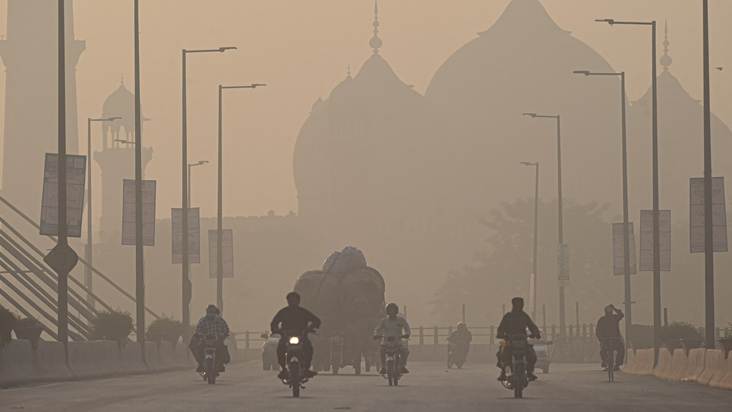
Smog is a mixture of smoke and fog forming dense, often toxic air pollution that reduces visibility and harms health. It is created when industrial emissions, vehicle exhaust, and other pollutants combine with atmospheric conditions like sunlight, temperature, and moisture. Cities with heavy industry, dense traffic, geographic features that trap pollution, and specific weather patterns experience extreme smog. Notably: Delhi, India; Lahore, Pakistan; Beijing, China; Mexico City, Mexico; Los Angeles, USA. These cities often face severe smog episodes due to a combination of local pollution sources, meteorological conditions, and population density.
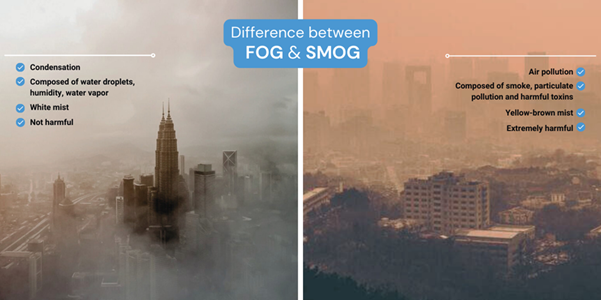
What are the main pollutants caused the smog?
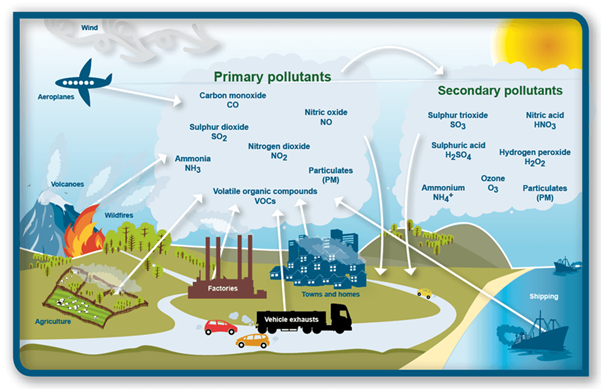
Smog is an air pollution phenomenon composed mainly of particulate matter (PM) and ground-level ozone (O3). It is formed when pollutants such as nitrogen oxides (NOx), volatile organic compounds (VOCs), sulfur dioxide (SO2), ammonia (NH3), and particulate matter (PM) are released into the air also known as PM2.5, PM10, and then react chemically in the presence of sunlight and heat.

What are PM2.5 and PM10?
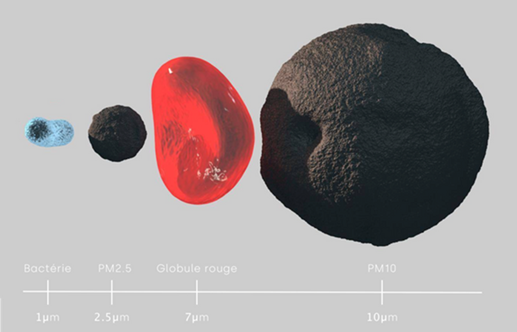
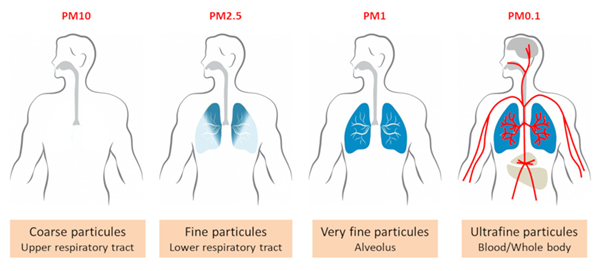
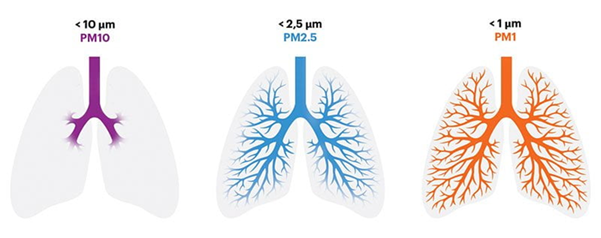
PM2.5 refers to fine particulate matter that has a diameter of 2.5 microns or less. These particles are a subset of PM10, which represents inhalable particulate matter with a diameter of 10 microns or less. Both PM2.5 and PM10 are tiny solid particles or liquid droplets suspended in the air, originating from sources like vehicle exhaust, industry, fires for PM2.5, and dust, construction sites, agriculture for PM10.
What are the causes and formation for smog?
PM2.5 refers to fine airborne particles ≤ 2.5 microns in diameter, primarily formed by combustion processes such as vehicle exhaust, industrial emissions, power plants, forest fires, and residential burning. These particles also originate as secondary pollutants when gases like sulfur dioxide (SO₂) and nitrogen oxides (NOₓ) react in the atmosphere to form sulfate and nitrate particulates. Components include black carbon (soot), organic compounds, heavy metals, and sulfates.
PM10 refers to coarse inhalable particles ≤ 10 microns in diameter and includes PM2.5 plus larger particulates. PM10 is generated by crushing, grinding, and other mechanical activities; sources include construction sites, road dust, mining, agriculture, pollen, sea spray, and volcanic ash. Human sources such as industrial activities and traffic also contribute.
Both PM2.5 and PM10 contain elements like carbon, sulfur, nitrogen, sodium, and mineral fragments.
What level of PM2.5 and PM10 considered good environment by WHO?
For a good and healthy environment, the World Health Organization (WHO) sets the following recommended limits for PM2.5 and PM10:
PM2.5 (fine particulates): Annual mean: ≤ 5 µg/m³; 24-hour mean: ≤ 15 µg/m³
PM10 (coarse particulates): Annual mean: ≤ 15 µg/m³; 24-hour mean: ≤ 45 µg/m³
Values below these thresholds are considered healthy and supportive of long-term well-being for city residents. Levels consistently above these limits are associated with significant health risks, especially for sensitive groups like children, the elderly, and those with respiratory disorders.
What is the current concentration of PM2.5 and PM10 in Lahore, Pakistan?
The current PM2.5 concentration in Lahore is about 156–175 µg/m³, while the PM10 concentration is around 129–223 µg/m³. These values are considered very unhealthy and severe, significantly exceeding safe air quality limits for human health. Anyone in Lahore should take precautions such as staying indoors, using air purifiers, and wearing protective masks if going outside.
What are the health risks related to smog?
PM2.5 particles are significantly more dangerous to health than PM10 because they are small enough to penetrate deeply into the lungs and can even enter the bloodstream, damaging organs and triggering diseases over time. Exposure to high levels of PM2.5 is linked to heart attacks, strokes, lung cancer, worsening of asthma, bronchitis, and even premature death. The effects are especially severe for children, the elderly, and people with pre-existing respiratory or heart conditions.
PM10 particles, although larger, can still be inhaled and affect the upper respiratory tract, causing symptoms like coughing, wheezing, and irritation of the eyes, nose, and throat. They worsen asthma and chronic lung conditions and, over prolonged periods, may increase the risk of respiratory diseases, though their impact is less severe compared to PM2.5 because they’re more likely to be trapped in the nose and throat.
What are the local controllable causes of smog?
Weather and transport play crucial roles in the formation and dispersion of PM2.5 and PM10 in the atmosphere. Meteorological factors like wind speed, wind direction, temperature, humidity, and rainfall directly influence how these particles spread and accumulate.
Strong winds can rapidly transport PM2.5 and PM10 over long distances, sometimes carrying pollution hundreds or even thousands of kilometers from its source. Northerly winds and cold fronts, for example, can both spread and rapidly clear particle pollution. Conversely, stagnant air or weak winds allow pollutants to accumulate locally, causing higher particle concentrations and prolonged pollution episodes.
High temperatures can enhance secondary particle formation, while temperature inversions (cold air trapped near the ground) can trap particulates near the surface, worsening air quality. Humidity affects particle growth and behavior.
Rain helps remove PM2.5 and PM10 from the atmosphere, reducing pollution via “wet deposition” (Smog water gun). When the mixing height (top of the lower atmosphere) is low, particle pollution is trapped near the ground; higher mixing heights allow better dilution and dispersion.
Vehicles and road transport are major contributors to PM2.5 and PM10 emissions through exhaust, tire and brake wear, and the stirring up of road dust. Traffic congestion and poorly managed urban transport can therefore raise particle levels significantly.
What is the role of water guns to eradicate the smog?
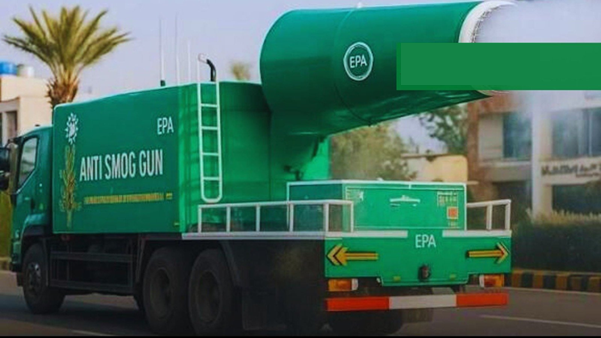
Water guns, often called anti-smog guns or mist cannons, help reduce PM2.5 and PM10 by spraying fine water mist into the air, which binds with dust and particulate matter. This process mimics natural rain, making particles heavier so they settle more quickly to the ground, thus reducing airborne concentrations temporarily.
These guns spray atomized water droplets (5-10 microns in diameter) using high-pressure fans or pumps, capable of reaching heights up to 100-230 feet and spraying between 30-100 liters per minute. The water droplets capture coarse dust and some finer particles and cause them to fall, creating a “canopy effect” that temporarily clears the air in the nearby area.
However, their effectiveness:
- Is mostly short-term and localized, providing temporary relief rather than a long-term solution.
- Works better for larger particles (PM10) than for finer, more harmful PM2.5, which are harder to capture due to their small size.
- Requires large amounts of water, which can be a concern in water-scarce cities, and repeated spraying is necessary to maintain impact.
In summary, water guns help reduce dust and larger airborne particles temporarily by artificially wetting and settling particulates, but they are considered a stopgap rather than a sustainable solution to air pollution.
What are the results of water guns use in Lahore, Pakistan?
The Punjab government’s water gun initiative in Lahore reportedly reduced PM10 particle concentration by almost 70% in targeted areas like Kahna, with the Environmental Protection Agency using air quality monitors to deploy these guns where pollution spikes are detected. Officials claim the anti-smog guns are designed according to Lahore’s local weather conditions and are effective in bringing down larger particulate matter temporarily by spraying fine water mist to settle the dust.
However, experts caution that the effect is short-term and localized, limited mostly to larger particles (PM10), with minimal impact on finer, more harmful PM2.5 particles which pose the greatest health risks. The initiative consumes vast amounts of water—over 2.2 million litres daily for 15 cannons—which raises concerns given Lahore’s severe water scarcity. Environmental experts call this approach a temporary “smog theatre,” emphasizing that sustainable air quality improvement requires addressing the root causes like vehicular emissions, industrial pollution, and crop burning. They warn that without fundamental reforms; water guns only provide transient relief but do not solve the systemic pollution problem.
In essence, water guns have contributed short-term pollution reduction in specific areas, but their long-term effectiveness and sustainability are questionable due to water usage concerns and minimal impact on the most harmful PM2.5 pollutants.
What are the long-term, cheap and sustainable solutions to eradicate the smog in big cities of Pakistan?
Long-term and sustainable solutions for smog eradication involve a wide range of systemic and proactive measures addressing the root causes of air pollution.
Increasing forestation and green spaces: Expanding urban forests, parks, and green belts helps absorb air pollutants including PM2.5 and PM10. Vegetation acts as a natural air purifier by trapping particles on leaves and through processes like photosynthesis. This also mitigates urban heat islands which worsen smog formation. Encouraging housing schemes that include green cover with trees and grass can significantly reduce dust from exposed soil and improve local air quality.
Strict traffic and speed limits: Implementing speed limits reduces exhaust emissions and resuspended road dust. Studies show speed reductions can cut particulate pollution by up to 15%, often without increasing traffic congestion. Lower speeds reduce fuel consumption and pollutant formation, improving air quality in urban areas.
Control of empty and dust-generating plots: Banning or requiring active land use on empty plots, especially in urban areas, prevents dust generation from bare soil. Measures like covering soil with grass, using dust suppressants, or paving reduce airborne dust significantly. Removing exposed dust from roads by paving or graveling also curbs dust emissions.
Urban planning and policy integration: Sustainable urban planning that prioritizes compact, walkable cities with mixed land use reduces long vehicle trips and thus pollution. Integrated policies linking energy, transport, and land use improve efficiency and reduce emissions systemically.
Additional Measures
- Transitioning to renewable energy and improving industrial emissions controls.
- Enhancing public transportation and encouraging use of electric and low-emission vehicles (Punjab electric bus Initiative).
- Improving waste management to prevent open burning.
- Promoting public awareness and community-level actions for pollution reduction.
- Engage public/private schools/colleges/universities to create awareness about smog health risk and causes.
In sum, a multi-faceted approach combining increased green spaces, traffic regulation, effective land use policies, and systemic transitions in energy and transport is essential for sustained smog eradication. These measures collectively reduce particulate matter sources and improve air quality resilience over the long term.
“Live long healthy Pakistan”

In it something is. Thanks for an explanation. I did not know it.
This phrase is simply matchless :), it is pleasant to me)))
——
https://hosting.estate/tags/%D0%BA%D1%83%D0%BF%D0%B8%D1%82%D1%8C%20%D0%B4%D0%BE%D0%BC%D0%B5%D0%BD%20%D0%B4%D0%B5%D1%88%D0%B5%D0%B2%D0%BE/
In my opinion you are not right. I am assured. I can prove it. Write to me in PM, we will communicate.
——
https://the.hosting/nl/help/hoe-het-besturingssysteem-opnieuw-installeren-op-een-vps
This really answered my downside, thank you!
Oh my goodness! an incredible article dude. Thanks Nevertheless I’m experiencing situation with ur rss . Don’t know why Unable to subscribe to it. Is there anyone getting equivalent rss downside? Anybody who knows kindly respond. Thnkx
Do you mind if I quote a few of your articles as long as I provide credit and sources back to your weblog? My website is in the very same area of interest as yours and my users would really benefit from some of the information you provide here. Please let me know if this alright with you. Thank you!
Yes, you can use the information from the Blog by including the credits. thanks